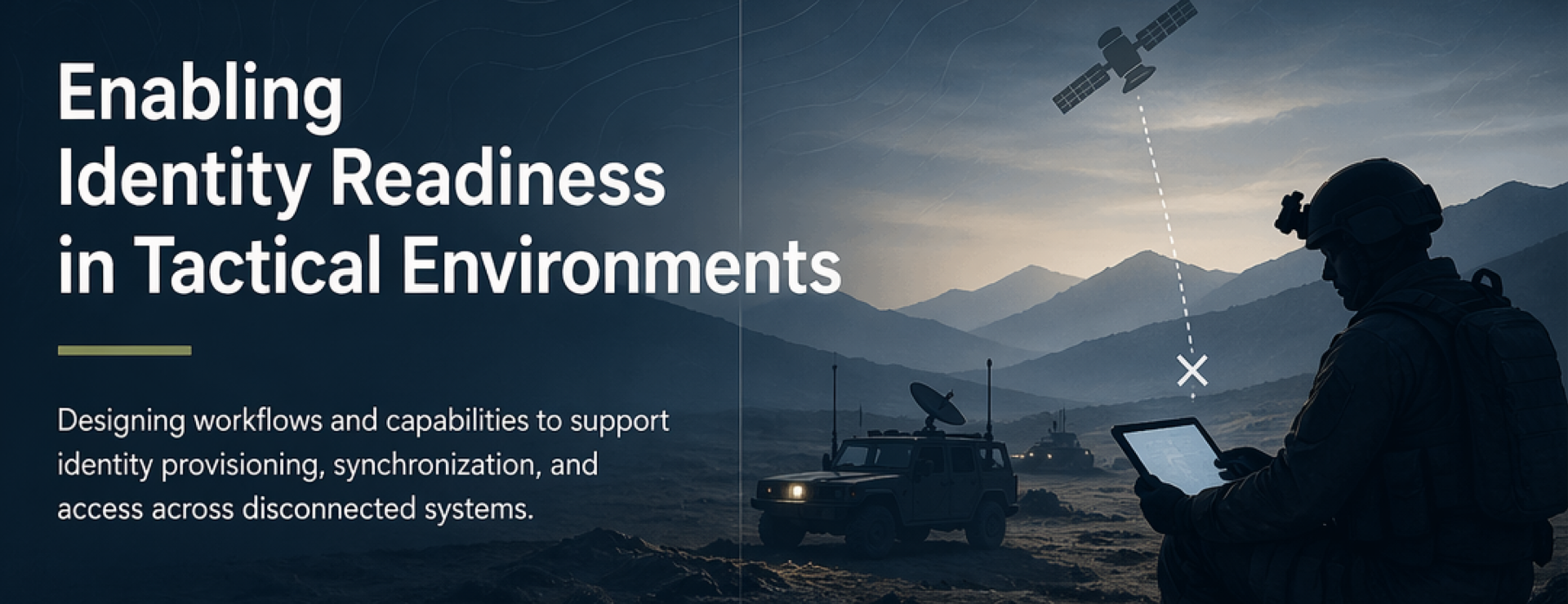
TICAM (Tactical Identity, Credential & Access Management) was a discovery and framing effort supporting the U.S. Army’s initiative to improve identity lifecycle visibility across distributed operational environments. The work focused on understanding how identity is created, provisioned, maintained, and retired across interconnected systems, identifying operational gaps that impacted readiness, access, and support workflows.
My role involved service design, stakeholder workshops, workflow mapping, and synthesis activities to uncover opportunities for improving identity lifecycle management and access experiences.
Identity and access were not failing in one place. They were breaking down across the lifecycle.
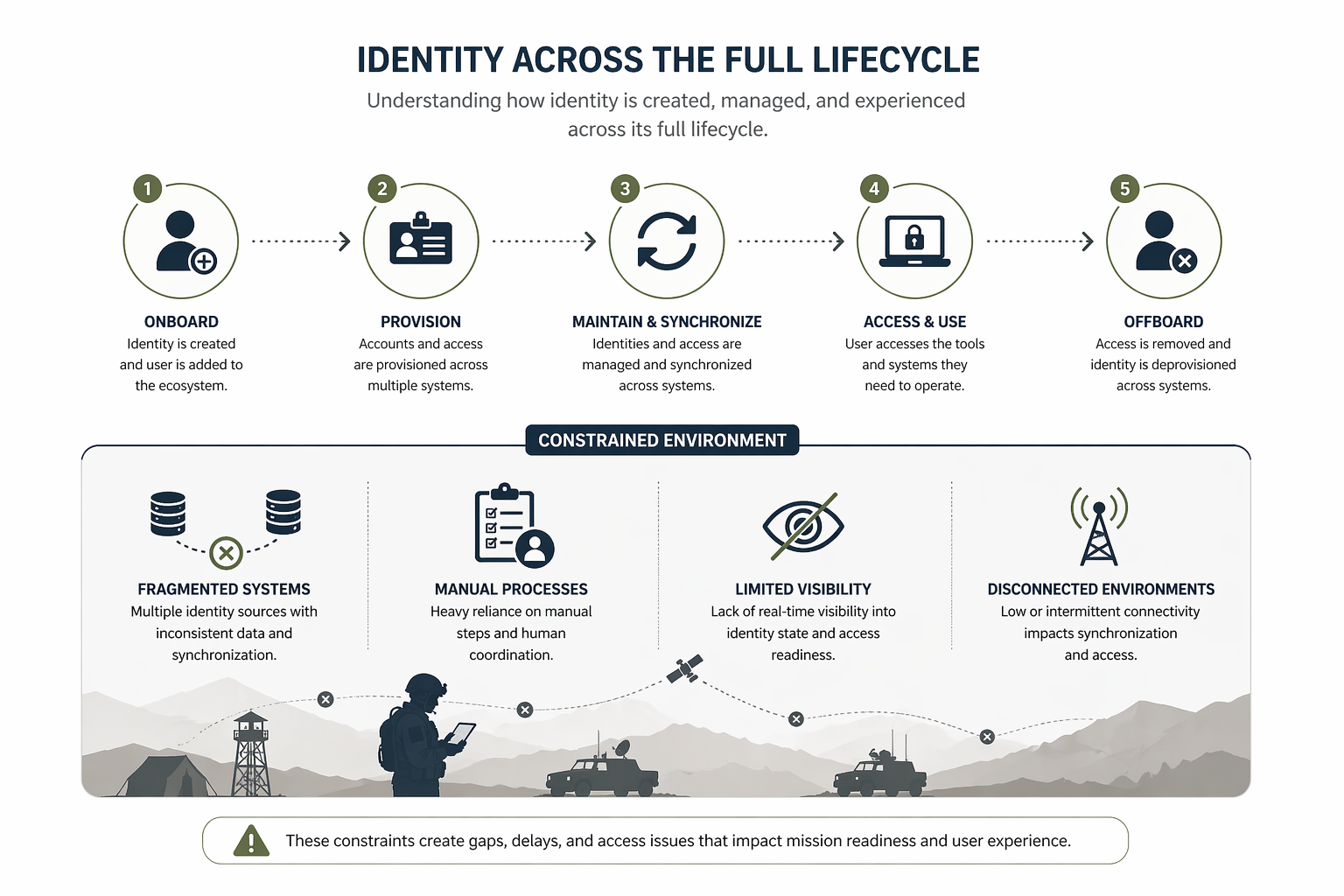
Users often had accounts in one system but not another. Access issues showed up later, while the root causes started earlier during provisioning. Support teams were left diagnosing symptoms without clear visibility into where breakdowns were happening.
• Fragmented identity sources with inconsistent synchronization
• Manual onboarding and provisioning workflows
• Limited visibility into user readiness and access state
• Support teams operating without root-cause insight
• Lifecycle events (arrival, transfer, exit) creating repeated friction
• Misalignment between system design and real-world operational workflows
Designing identity and access experiences in complex, distributed environments where systems, users, and infrastructure are not always in sync.
This effort focused on understanding how identity is created, managed, and experienced across its full lifecycle, from onboarding through ongoing access and eventual cleanup, within environments shaped by fragmented systems, manual processes, and limited visibility.
Context: Federal / Defense | Identity & Access | Enterprise Systems
This work applied a service design lens to connect system behavior with real-world operational workflows across the identity lifecycle.
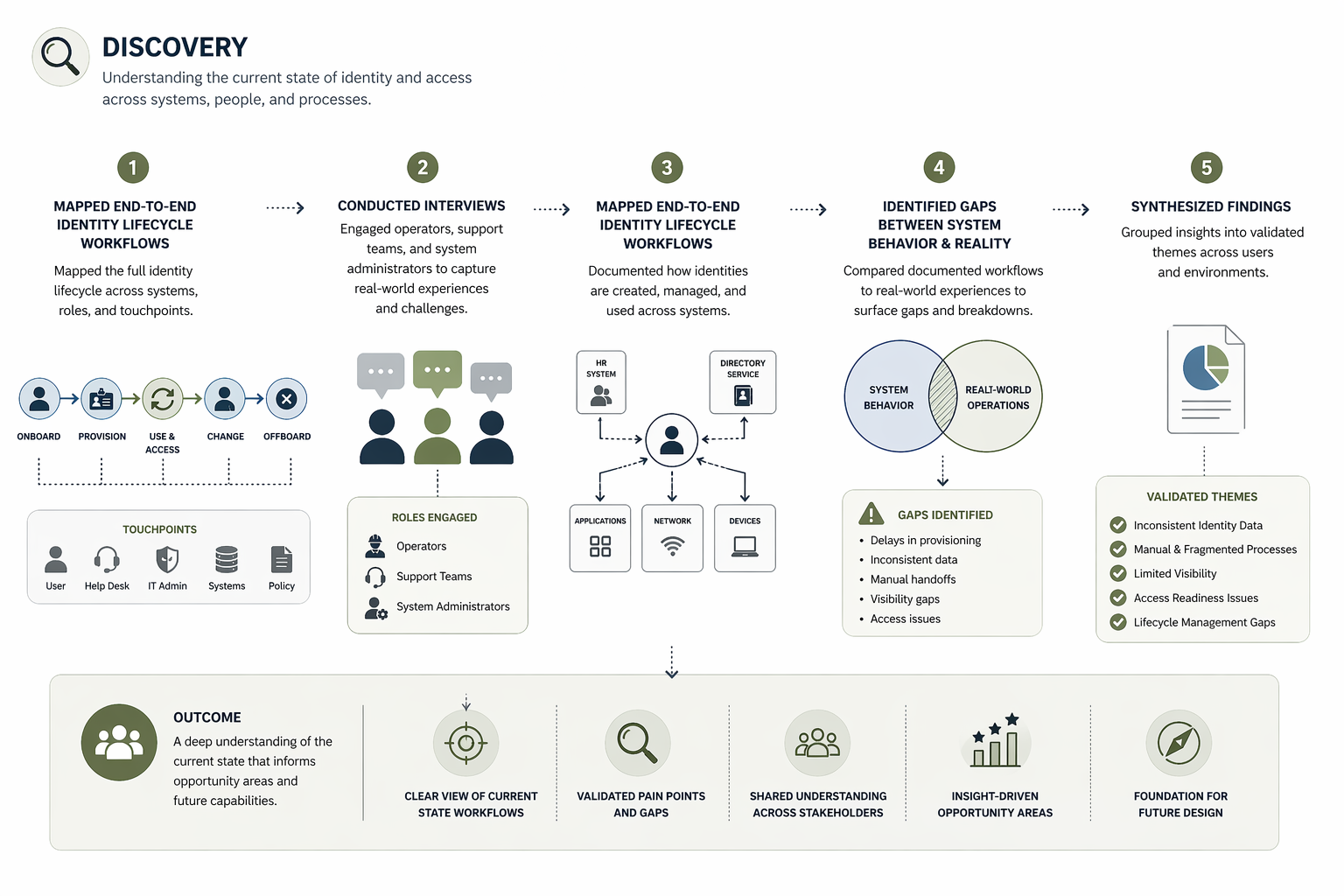
Mapped identity workflows across systems, roles, and touchpoints, conducted stakeholder interviews, identified gaps between system behavior and real-world operations, and synthesized findings into validated themes.
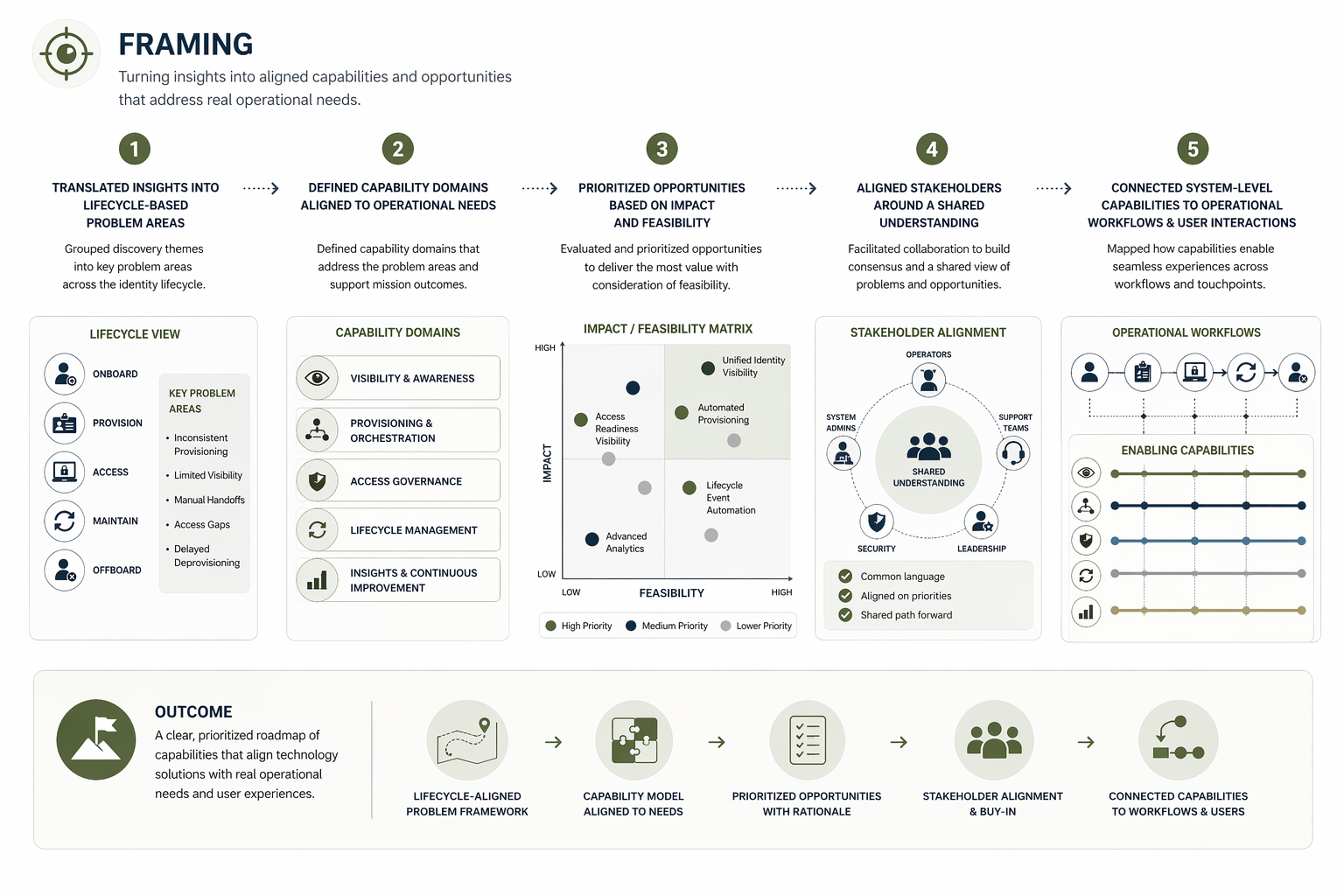
Translated insights into lifecycle-based problem areas, defined capability domains aligned to operational needs, prioritized opportunities based on impact and feasibility, and aligned stakeholders around a shared understanding.
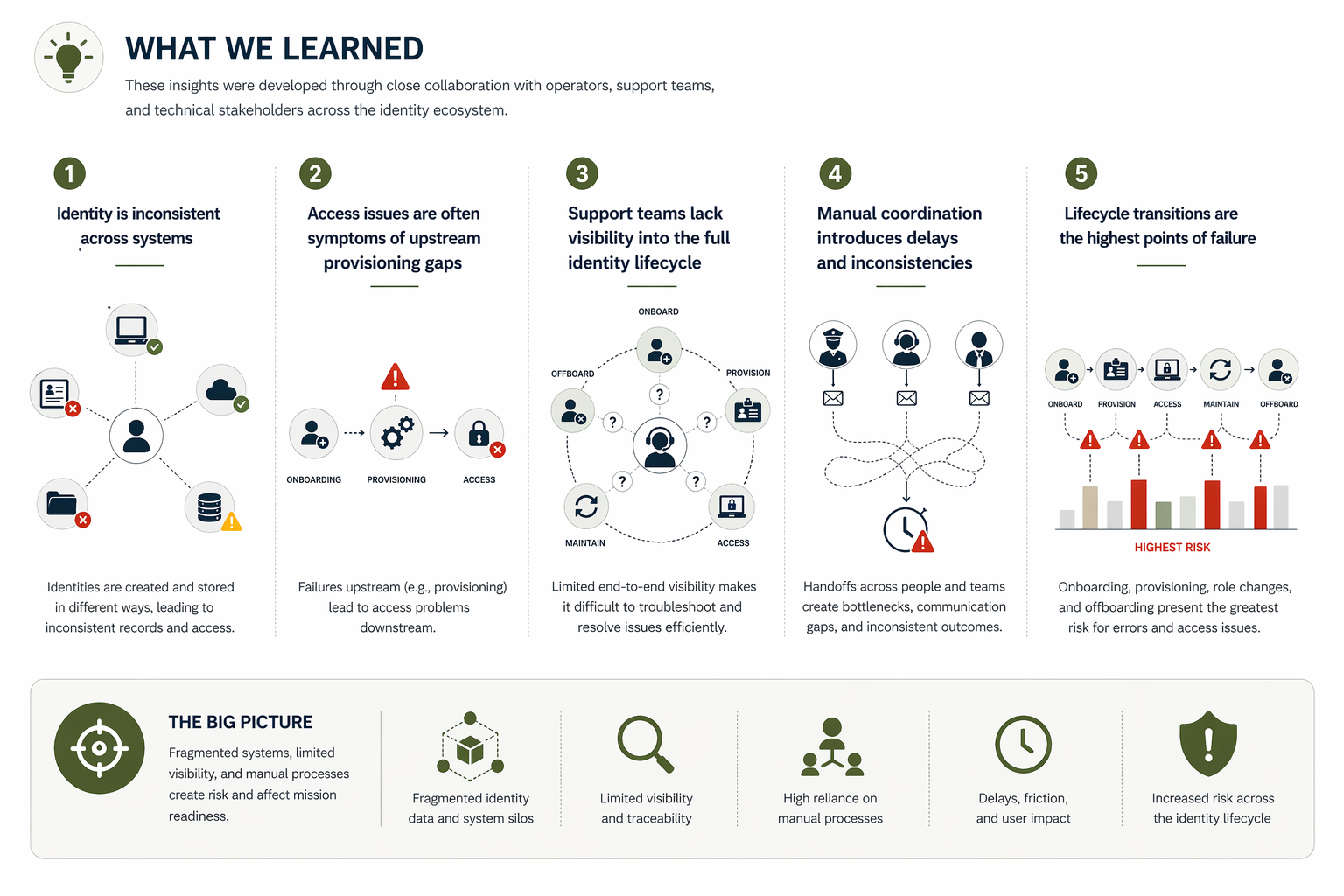
These insights were developed through close collaboration with operators, support teams, and technical stakeholders. Working across disciplines allowed us to validate findings, challenge assumptions, and ground observations in real-world operational experience.
Rather than relying on a single perspective, this approach ensured that insights reflected both system behavior and the realities of how identity and access are managed in practice.
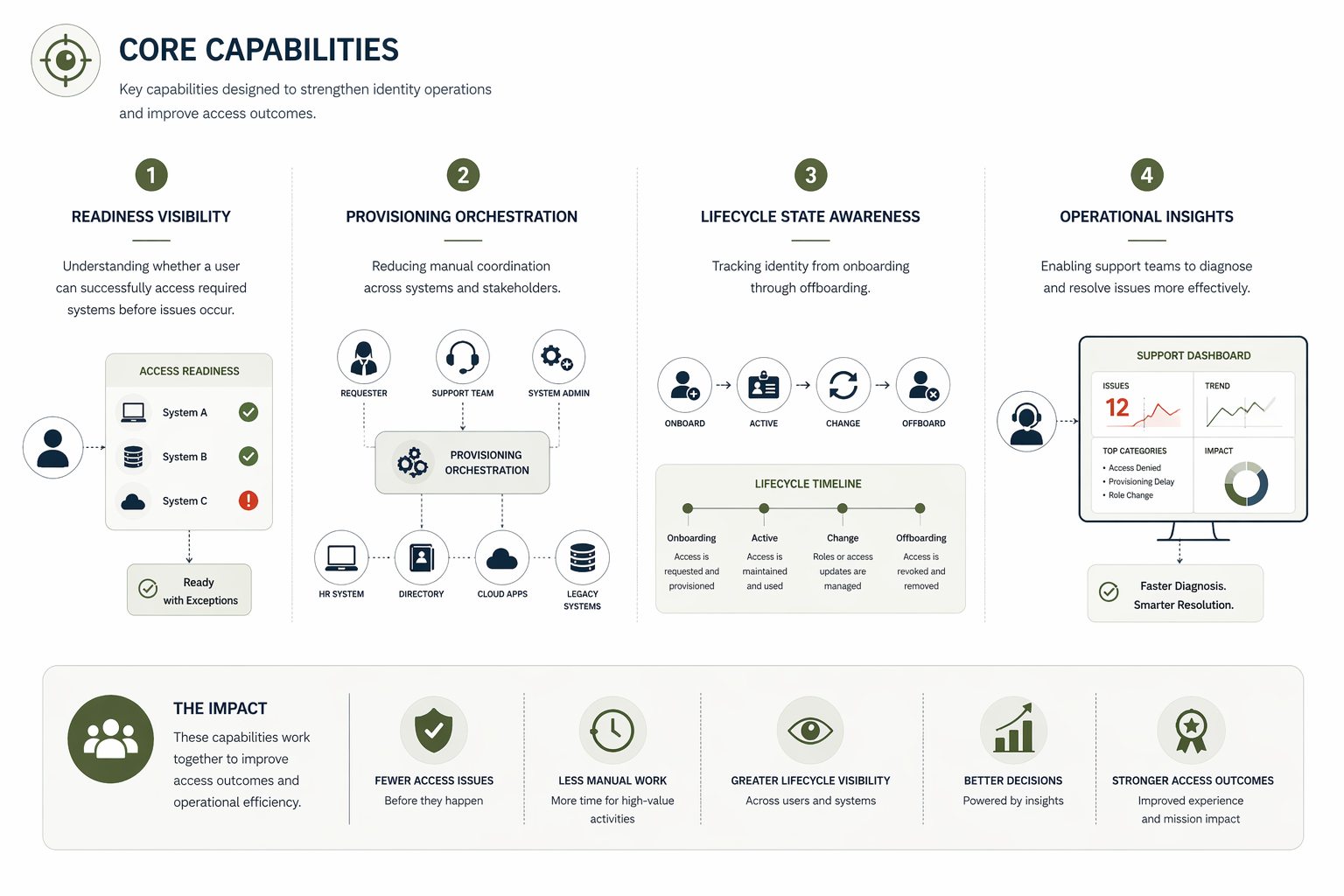
This work defined a set of capability areas focused on improving visibility, coordination, and reliability across the identity lifecycle. These capabilities address key operational gaps and align system behavior with real-world workflows.
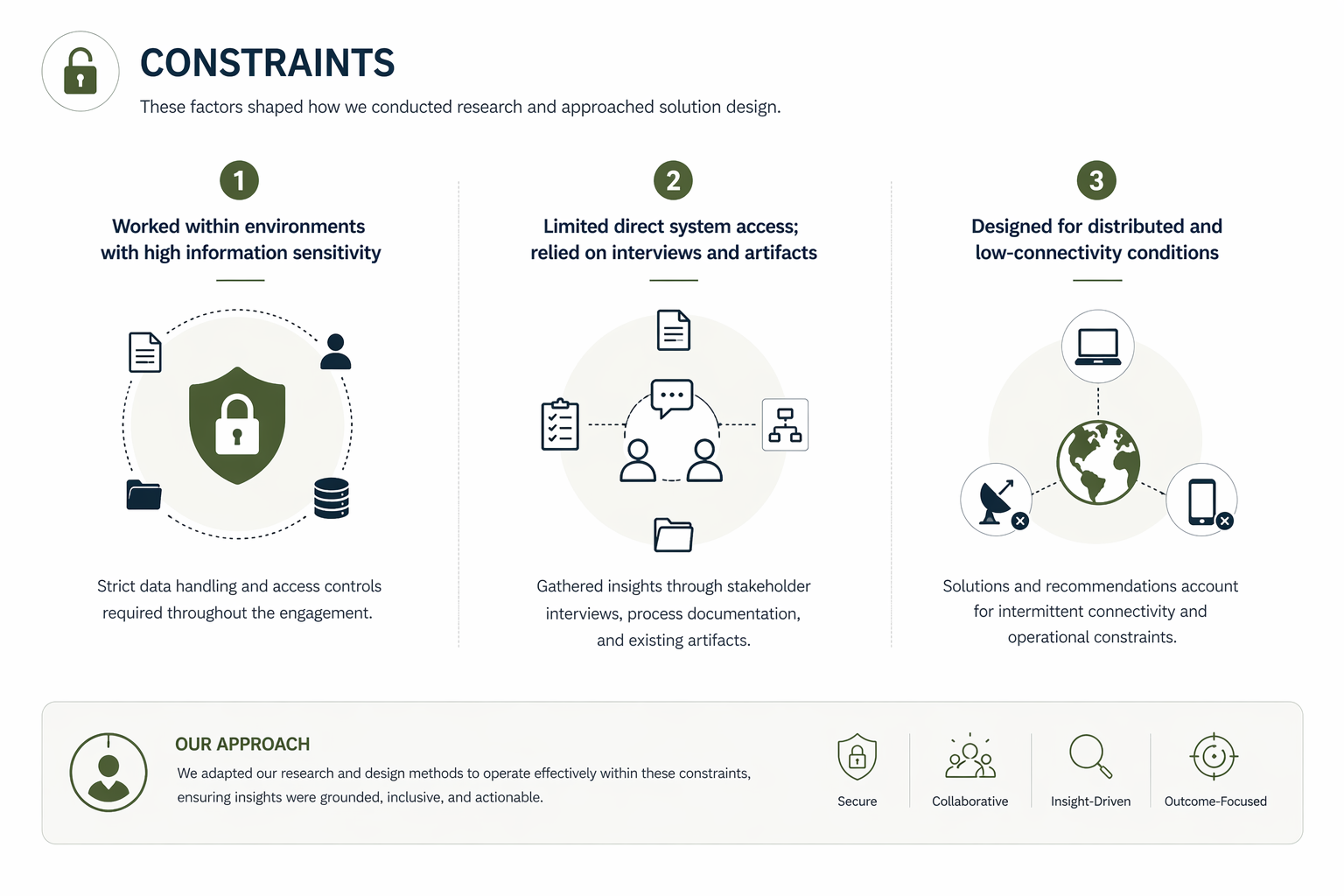
This work was shaped by a set of operational and environmental constraints that influenced how research was conducted and how solutions were approached. These factors required adapting methods while ensuring insights remained grounded in real-world conditions.
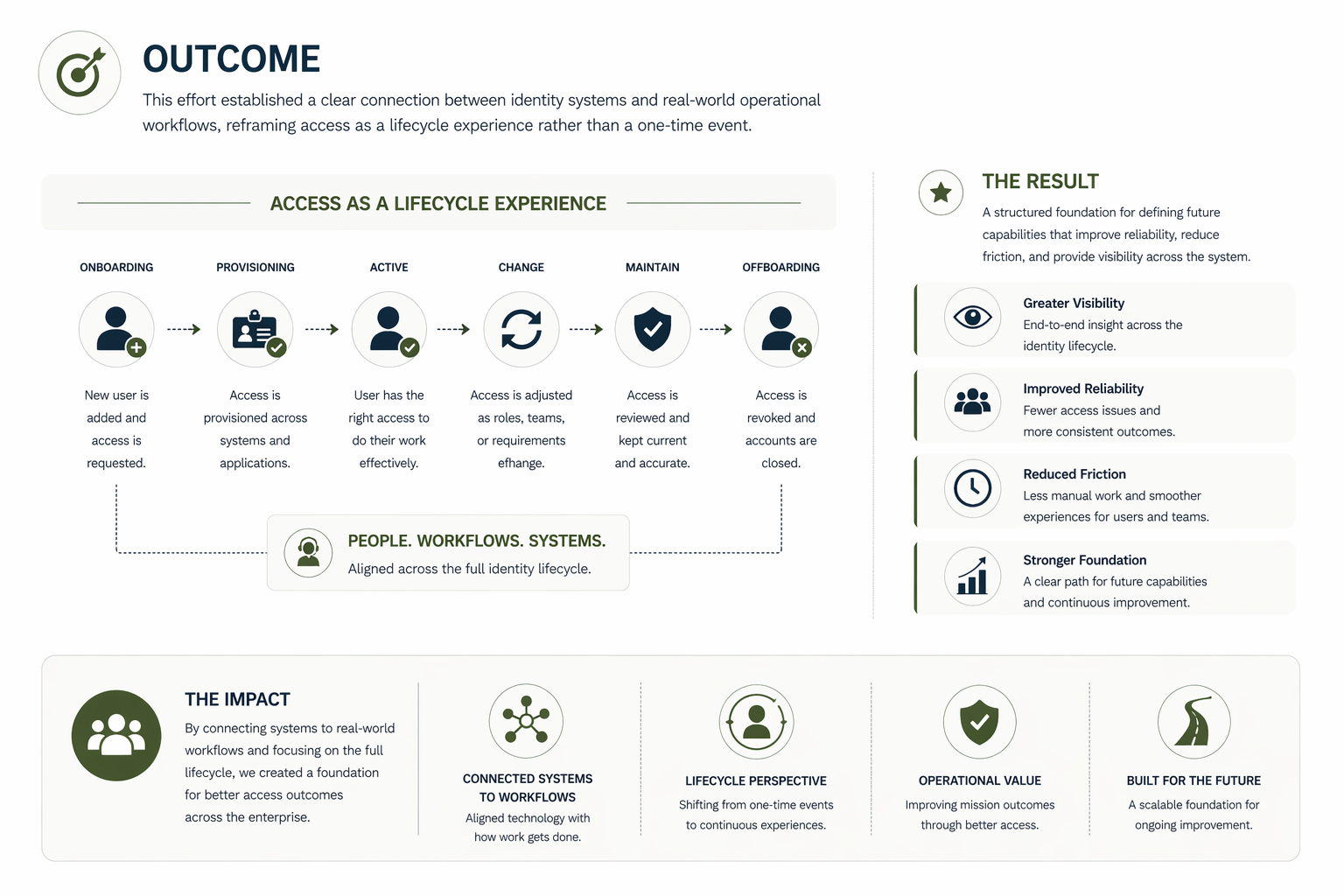
This effort established a clear connection between identity systems and real-world operational workflows, reframing access as a lifecycle experience rather than a one-time event.
The result was a structured foundation for defining future capabilities that improve reliability, reduce friction, and provide visibility across the system.
While some client-facing materials were classified as Controlled Unclassified Information (CUI), the details presented here have been intentionally generalized to respect the sensitivity of the environment while preserving the integrity of the design approach and outcomes.
YOU MAY ALSO BE INTERESTED IN: